Baruch Spinoza
God, or Nature
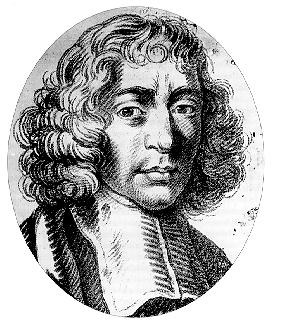
Baruch Spinoza (1632–1677) was excommunicated from Amsterdam’s Portuguese-Jewish community at 23, for views the community’s leaders considered heretical. Three and a half centuries later, Spiritual Humanistic Judaism stands closer to Spinoza than to almost any other Jewish thinker — not because he tried to reform Judaism, but because he asked, more clearly than anyone before him, what is actually left of “God” once you take the supernatural Subject away.
Deus Sive Natura
Spinoza’s phrase Deus sive Natura — “God, or Nature” — collapses the distance between creator and creation entirely. For Spinoza, there is one infinite substance, and everything that exists is a way that substance expresses itself. God does not stand outside the universe, willing it, judging it, intervening in it. God simply is the universe, understood completely. There is no one to pray to, because there is no one apart from everything there is.
Whatsoever is, is in God, and without God nothing can be, or be conceived.
Why He Matters Here
Spinoza did not found a movement or write a liturgy. But his move — keeping the word “God” while entirely emptying it of personhood, will and supernatural agency — is the oldest and starkest version of the same move Spiritual Humanistic Judaism makes when it sets aside God, godly and godliness as terms in its own theology and liturgy. Where Spinoza kept the word and redefined it, we’ve chosen to set the word down and speak instead of holiness enacted — but the underlying conviction is the same: reality does not need a ruler standing over it to be worthy of awe.
It is fitting that the community’s own study circle takes his name: the Spinoza Havurah, whose rabbi wrote Tefilotenu, this community’s siddur.
See also Our Scholarship for how this connects to Kaplan, Schulweis and Falk.